Introducing Kate Slesinger | Ex-Condé Nast Publishing Director, now Advisor to Start-Ups & SMEs
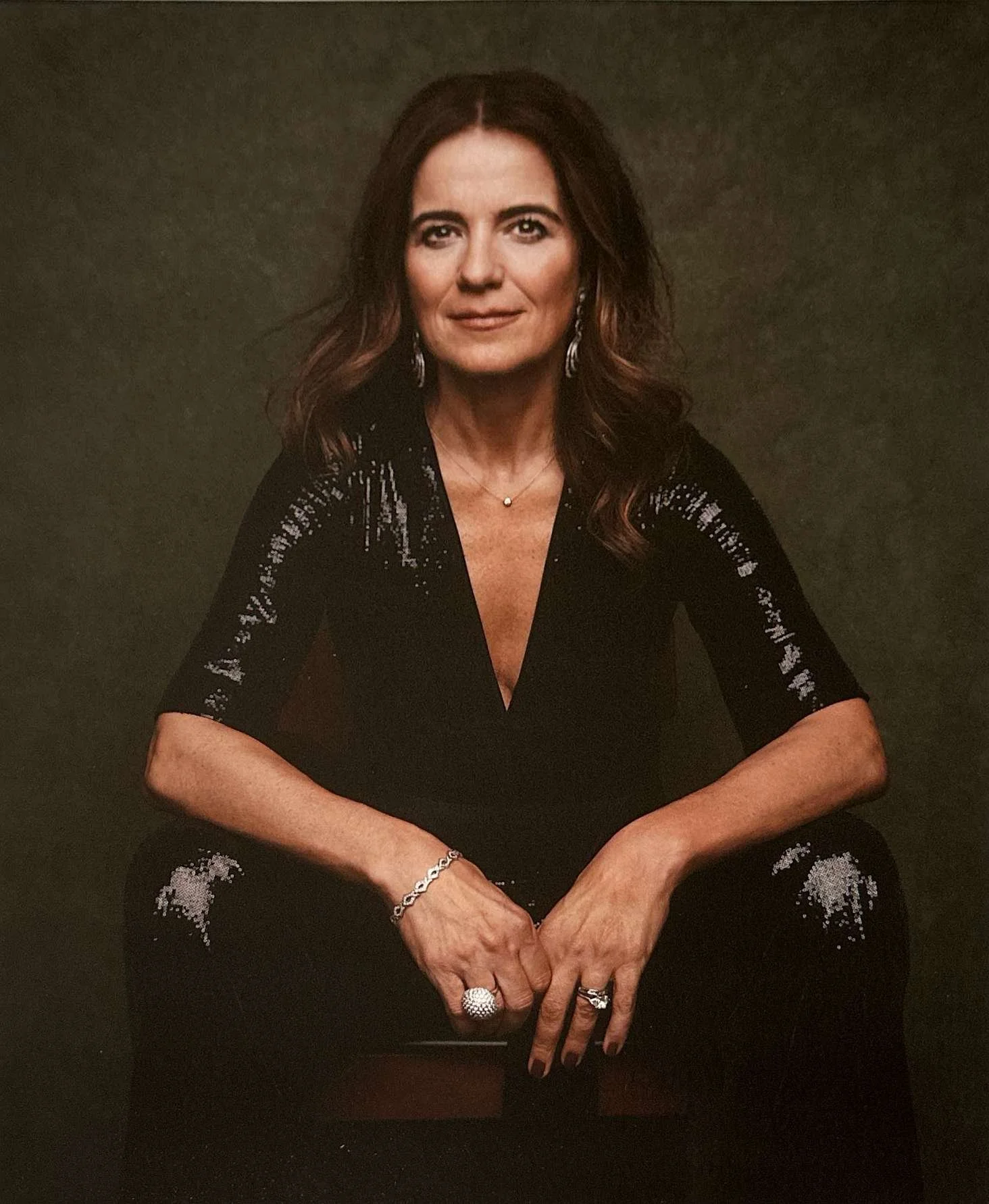
Dave Benett
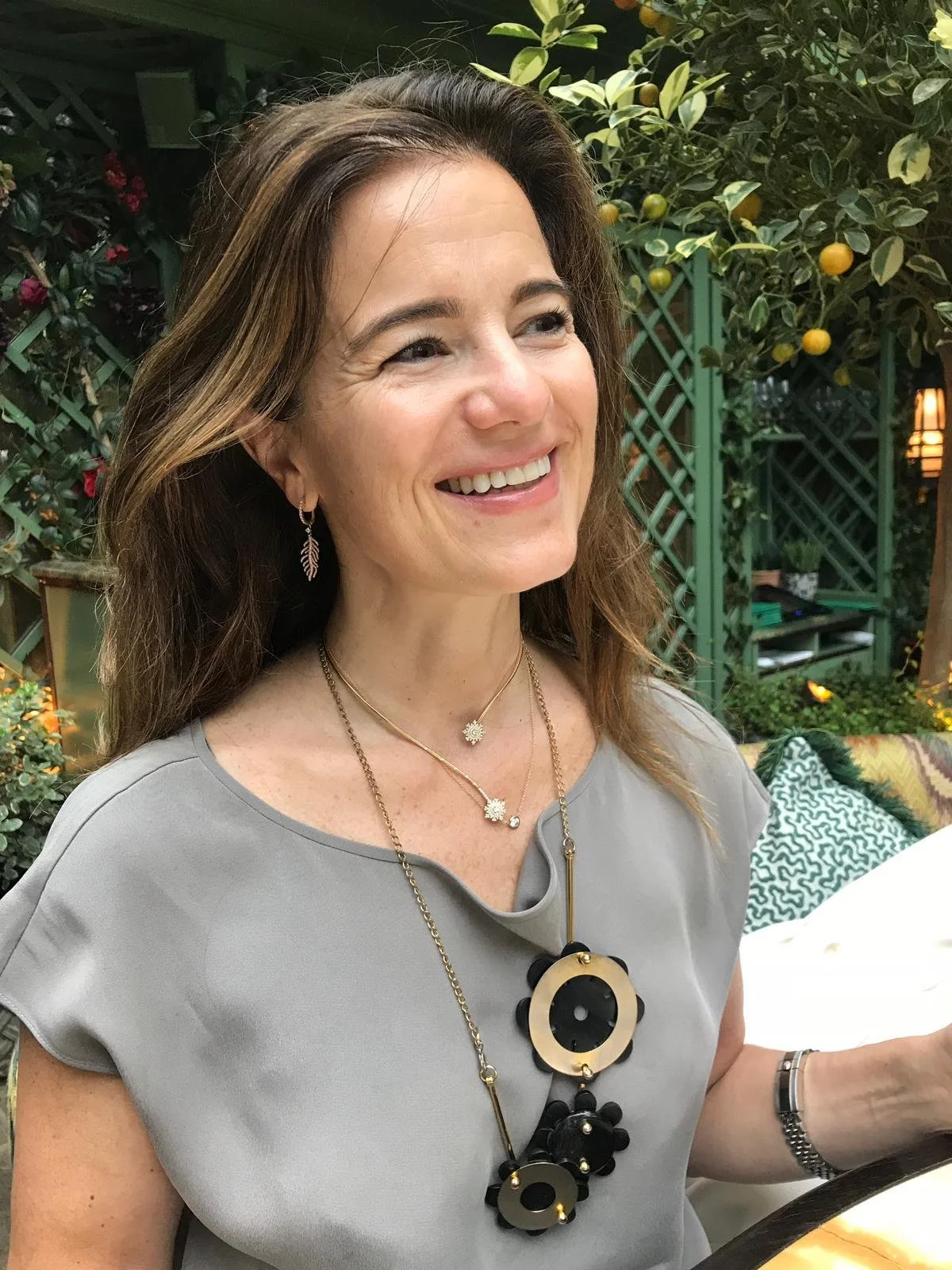
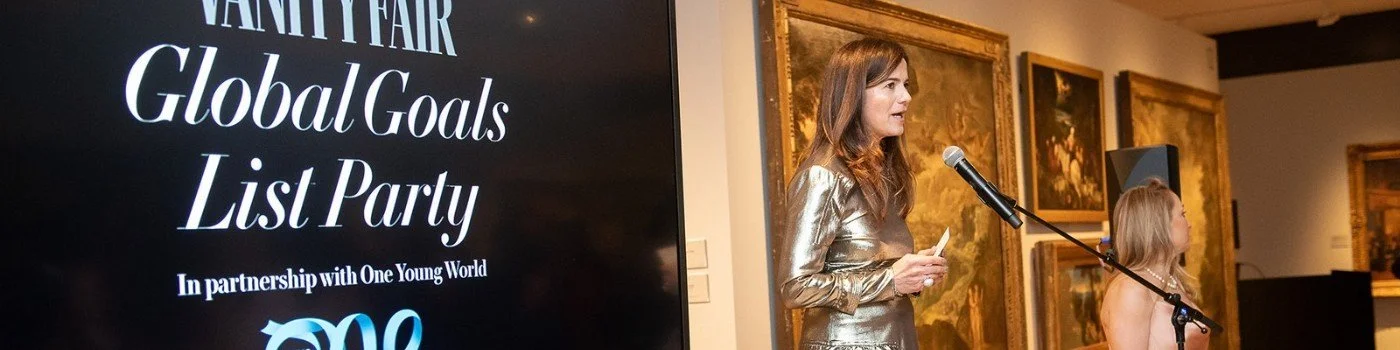
Meet Kate Slesinger, former Condé Nast publishing director turned trusted advisor to founders and leadership teams navigating growth, change and complexity. With a career spanning global media, private equity and board roles, Kate brings rare clarity to the intersection of brand, strategy and decision-making under pressure. Join us as we explore leadership, money and wellbeing through the lens of purpose, restraint and long-term thinking, and what it takes to build businesses, and lives, with sustainable momentum and a clear sense of enough.
WEBSITE | LINKEDIN
“With an MA from Cambridge, I began my career at WPP in London and New York before a 25-year tenure at Condé Nast Britain. Rising through the commercial ranks at Vogue, I went on to serve as Publishing Director of Condé Nast Traveller, House & Garden, Tatler and Vanity Fair, stewarding some of the world’s most influential luxury media brands. I was later headhunted to a US private equity firm, advising on strategy and growth across premium consumer businesses. Today, as an advisor and board director, including pro bono for the Soil Association, I partner with founders to build brand equity, clarity and momentum.”
You spent more than two decades at Condé Nast leading some of its most prestigious brands. What were the core lessons about leadership you learned from steering these legacy titles through major industry shifts?
The most important lesson I learnt at Condé Nast was that the most enduring type of leadership is earned not bestowed: by which I mean that a successful and credible leader has the ability to gain the trust and respect of their team through wisdom, experience and committing to transparency and honesty. Consistency and an even hand are crucial. Listening with kindness too. In an industry not always known for its human side, I learnt that having one can single you out as someone to follow for the long run.
After your career in publishing, what inspired you to pivot toward advising founders and leadership teams as a strategist, and what gaps were you aiming to fill in that space?
During my years as Publishing Director on the flagship titles at Condé Nast, I ran commercial teams that chased the money: revenue came mainly from multi-national fashion, beauty, watches & jewellery and travel brand advertisers, who expected their spend to be reflected in the editorial coverage they achieved, and we had to monitor this very closely. Frequently, however, I would be approached for help and advice by leaders and founders at emerging businesses, who didn’t have ad budgets. These turned out to be the people who most inspired me, as we had to be creative and strategic in order to help them find ways of working with magazine titles that had tightly controlled commercial checks and balances governing editorial. After Condé Nast, I was headhunted to join the London office of a US/LatAm-based private equity fund, specifically to help steer newly-acquired apparel brands that fell outside of the portfolio that was otherwise fin-tech and SaaS. I worked closely with the founders in most of the businesses, and came to the realization that, in the early stages, leading up to or immediately after Series A funding, teams are lean and the day-to-day is all-consuming. What the founders were lacking was someone taking an objective look at their business and identifying the levers to unlock growth. That’s where I can add value.
In your work with founders, what recurring strategic blind spots or opportunities do you see across early-stage companies?
I see the founders being dragged into the weeds with all sorts of distractions – from maintaining consistent workflow and output, to HR concerns, to office/workshop space – which hampers them in identifying and sticking to a mission and vision for their business. I see them bending the business’s needs to fit their teams, not the other way around. The opportunities are there, but they are too busy and exhausted focusing on the day-to-day. I love helping them see and realise what is right at their fingertips.
You talk about clarity being the foundation of good strategy. How do you help leaders translate strategic ambition into practical actions?
I recommend keeping to a tight list of targets: having twenty goals at the start of the year or quarter is a certain means of ensuring that none of them will be achieved. Set yourself three go-fors that fulfil strategic aims, such as sharpening your e-commerce toolkit, defining and cultivating your target audience, expanding internationally, and stick to them. Stay on message at all times, and remember what your brand offers that others do not: this is your North Star.
What is your philosophy on decision-making under uncertainty, especially for founders facing rapid growth or market shifts?
Prioritise which decisions absolutely need to be made and which can wait until the way ahead is clearer. Making too many decisions at once can mean that the impact of one upon the other is not fully known or understood; and more often than not, business decisions hang off one another like twists in a Rubik’s cube.
Looking ahead, what trends do you believe will most shape commercial success for founders and leadership teams in the next 5–10 years?
The ability to harness AI and re-establish a way of working around the backlash/growing cynicism towards social media will be key drivers of commercial success Understanding that children are increasingly pivoting to magazines and books, driven by parental frustration and new legislation. Sustainability and authenticity are once again values being upheld by the next generation of consumers.
What’s one piece of strategic advice you wish every founder would implement earlier in their journey?
Identifying and simplifying the brand mission and vision is everything and saves wasted effort in the long run. If you can articulate – in as few words as possible – exactly why your customers need the product or service you are providing, then you are paving the way to a compelling brand narrative that forms the cornerstone of all messaging, retail initiatives and partnerships.
What books, experiences or mentors have most influenced your strategic thinking?
Ogilvy on Advertising (first published 1983) made a huge impression on me when I started in the advertising industry as a J Walter Thompson graduate trainee in the ‘90s. Identifying a simple message that makes people want to buy what you are selling is the holy grail of all businesses, and I have always tried to bring that simplified and succinct treatment to all my thinking. Rory Sutherland, himself Ogilvy Vice Chair and phenomenally insightful on human bahaviours, is also someone I listen to.
WEALTH
Describe your relationship with money and personal finance in three words?
Resourceful; risk-averse; unfazed
How do you define wealth?
For me, wealth is not about appearing obviously affluent; it’s about having freedom of choice. About having more income than expenditure, with the income being generated from a passive source. Making money while you sleep is the dream!
What money lessons did you learn when growing up? What would you have done differently?
Growing up in a family whose entire livelihood was in the entertainment business, I learned that cash-flow matters and that investing in a secondary source of income can give you the space and time not to be forced to take a job just to pay the bills. This, for my generation, took the form of investing in property. I’m not sure that this is now so much of an option, having endured successive governments doing their best to destroy the property investment market. However, there are so many more opportunities available now with the internet and GIG economy.
If I could do anything differently, I’d have started investing in a bog-standard tracker fund earlier, even in small amounts. Time and consistency achieve a lot of the heavy lifting with compound earning.
What has been the most helpful tool for you to learn about money?
Personally, I have learnt through hands-on experience and listening to my father.
How do you organise and manage your own finances?
I have always kept a simple ledger of income and expenses with a view to upcoming commitments. It’s obvious but effective. Other than my property investments I haven’t been too adventurous.
I have recently started using a financial advisor. I had previously confused them with someone who will tell me how to make investments, feeling uneasy with this as I don’t want to be ‘sold to’. This is a misconception if you have the right financial advisor. If asked, they will simply make sure that you take advantage of all the tax breaks available and make your money work for you in ways that you perhaps wouldn’t fully understand or have the discipline to do. Given my time again, I see the advantage in this and I would have started as early as I could have.
What is the best money decision you have made?
Establishing a passive income early on by getting a toe on the property ladder. I used a sensible amount of debt to buy low, renovate, and then sell high. Wash, rinse and repeat…
What is your number one financial priority?
Sustainable surplus.
Making sure there’s always a healthy margin between what comes in and what goes out, personally and professionally, so I can handle risk, plan confidently, and invest deliberately rather than reactively.
How often do you talk about money with your friends?
Rarely, unless it’s to commiserate about VAT on school fees.
Which area of finance do you wish you knew more about, and why?
Investing and tax-efficient planning, because small improvements compound over time. I’m comfortable with budgeting and prudence, but I’d always like a deeper understanding of how to optimise decisions without taking on risks that don’t suit my temperament.
Charlotte Mayhew
WELLNESS
What practices, physical or philosophical, keep you anchored when life gets chaotic?
Anything that allows me to have an uninterrupted hour with my own thoughts. Whether that is rowing on my Hydrow, swimming, walking the dog or cooking, time spent doing something on my own terms helps anchor me.
Is there a particular place or person you turn to for inspiration?
I’m never more inspired than when exercising in the mountains: it could be anything from walking to cross-country skiing or downhill skiing. Ideally I’d be doing all of these things with my husband, but when he’s not available, I coopt the dog. Connecting with the natural world is an endless source of inspiration and my camera roll is spilling over with dramatic images of landscapes rather than people or things.
Do you have a morning routine to set you up for a productive day?
Getting outdoors for an hour before sitting down at my desk is a non-negotiable.
What are you currently reading and listening to?
David Szalay’s Flesh (the 2025 Booker Prize winner). I don’t want it to ever end. His writing style is sparse and yet the characters are so richly portrayed. Podcasts are great fuel for walking and I’m currently working my way through the Tortoise Media canon, which is a rich seam of investigative journalism and factual documentaries spanning true crime to historical.
One ritual that never fails you.
Don’t laugh…. Fermenting my own kefir water, a process I find satisfyingly meditative and relaxing: it’s like a cross between gardening and cooking, and the end product is something that benefits your health. It’s a – surprisingly simple to master - skill I learnt on a yoga retreat at the brilliant Yeotown in Devon
A book or idea that changed how you see the world.
‘Less’ by Patrick Grant. It’s a timely reminder that we don’t need to acquire and surround ourselves with so much ‘stuff’. Only a generation ago, our parents were darning holes in sweaters and re-heating leftovers – where now the instant reaction is to throw them away.
The sound, scent, or space that instantly grounds you.
As a teenager, I played the oboe and ‘Gabriel’s Oboe’ by Ennio Morricone (theme music to The Mission) instantly transports me back to my younger self but also to the natural world in a way that’s hauntingly romantic.
And finally; what does ‘enough’ mean to you?
I have come to see that ‘happiness’ is a temporary state: what fires us as human beings is fulfilment. Well-being is about feeling fulfilled, which has a deeper need that is connected with purpose. If we can set our dial to ‘purpose’ and do every job well (whether that is in a professional or a personal context) then fulfilment will follow and it will feel ‘enough’.