Introducing Lucy Litwack | Owner and CEO Coco de Mer
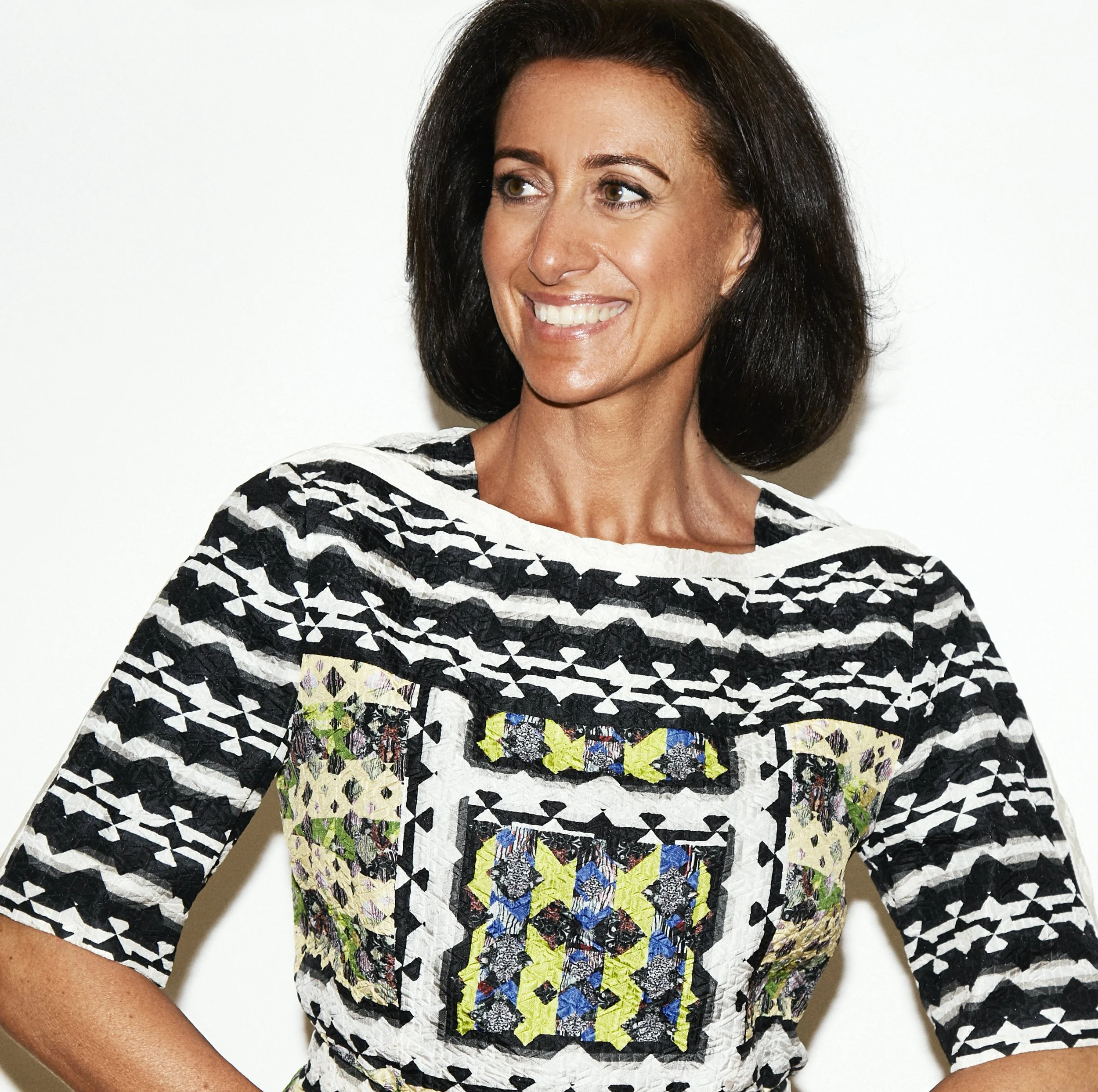
Meet Lucy Litwack, owner and CEO of Coco de Mer, the pioneering luxury pleasure brand that has spent over two decades quietly rewriting what it means to centre women in conversations about desire, sensuality, and self-worth. With 25 years in the lingerie world spanning La Perla, Victoria's Secret, and even the launch of David Beckham's Bodywear line, Lucy knows this industry from every angle. She completed the management buyout of Coco de Mer in 2017 and has been building it into something far greater ever since. A self-described grafter who grew up watching her parents run a jewellery shop, she brings the same shopkeeper's instinct to a brand that was always meant to be radical. Join us as we explore female pleasure as a form of power, the psychology of what we wear closest to our skin, and why owning your sexuality is not an indulgence but an act of agency, with a woman who found her forever home in the most unexpected of places.
WEBSITE | personal LINKEDIN | | company linkedin | INSTAGRAM
“I have over 25 years of experience in the lingerie world, managing the brand strategy, creative design, merchandising and development of a multitude of luxury and commercial brands. Prior to joining Coco de Mer in 2014, I held director positions at brands including La Perla, Bendon and Victoria’s Secret, in addition to developing and launching David Beckham’s Bodywear line.
Retail is in my blood - my parents were jewellers, and I grew up learning the art of shopkeeping. Owning Coco de Mer has felt like getting the keys to my forever home.
I believe in the empowerment of women, and the healthy self-confidence that comes with pleasure seeking and a more progressive viewpoint. Lingerie is about redefining sexuality on our own terms as women, and it really can be life-changing. Coco de Mer is such a perfect home for that belief, and has been such a pioneering space for female pleasure.”
Coco de Mer has always occupied a space between sensuality and sophistication. When you think back to its earliest identity, what felt radical about it at the time?
The brand was launched in November 2001, with the beloved flagship boutique on Monmouth Street in Covent Garden. I joined as Managing Director in 2014, completing an MBO in 2017, and have been the owner and CEO ever since.
With 26 years of working in lingerie, I can safely say there is something very special about Coco de Mer. The brand has always punched above its weight, and has been considered a niche brand in the past, but it has the potential to be so much more - a true, global luxury brand, focused on female pleasure. The purpose was clear from the start and has been there ever since; to cultivate a space and brand focused on lifting up women, shining a light on female pleasure and celebrating the joys of life.
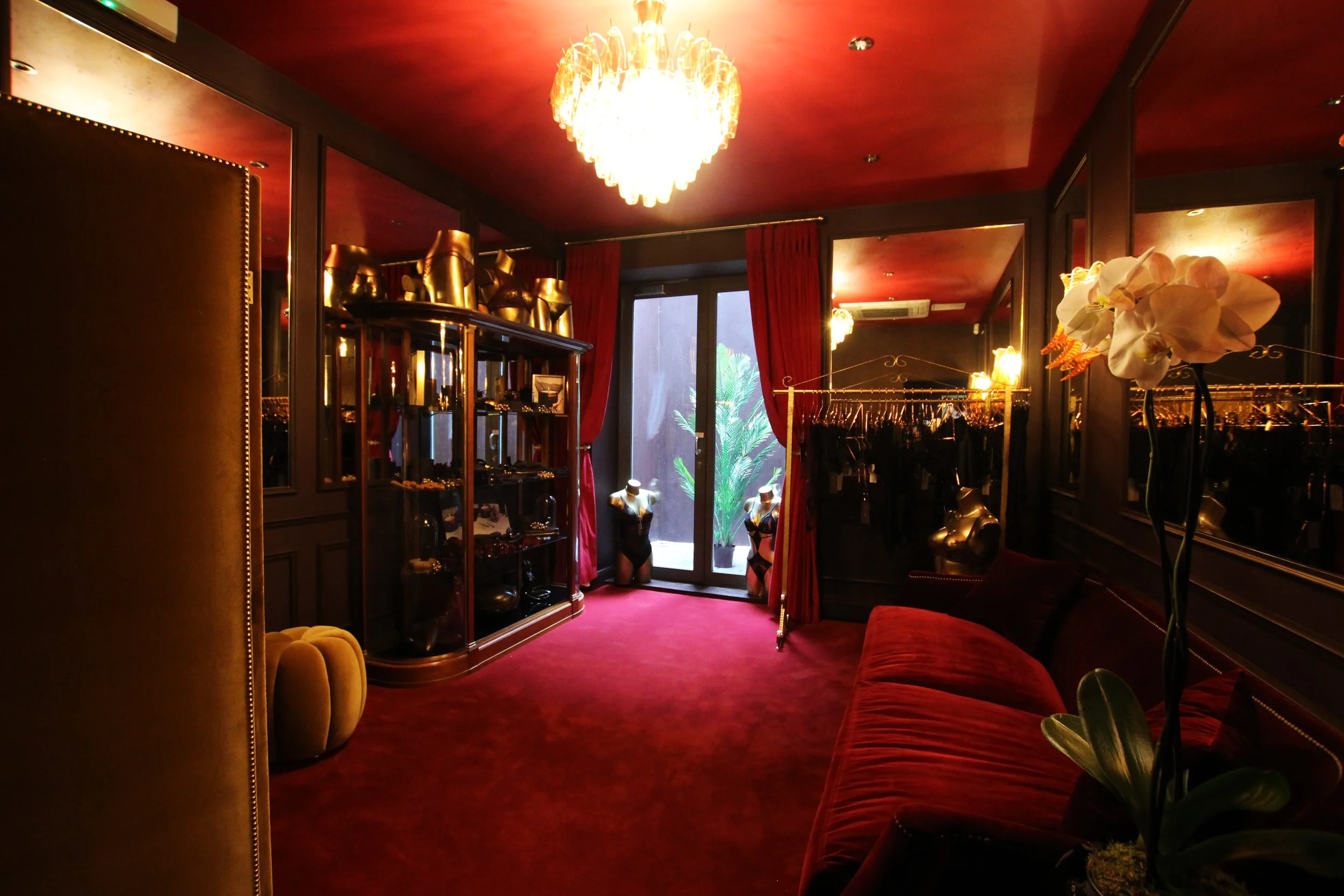
In the late 90s and early 00s, there really wasn’t a luxury brand or space catering for premium erotica and pleasure quite like Coco de Mer. And certainly not one focused on women and their pleasure. There was still the idea of sex shops being for seedy men in raincoats - whereas our boutique in Covent Garden was an emporium of exploration, a complete celebration of sensuality. A non judgemental and welcoming space filled with multiple brands and curiosities. In my 12 years we have been carefully curating the assortment and developing our own brand collections, celebrating a true Coco de Mer spirit and product range, with a wonderfully luxurious feel.
To me, the lingerie world is an ever-evolving - and extraordinary - world of female sensuality, creativity and sexual self-expression. Who doesn’t want to be in that universe? The lingerie industry has evolved from a functional service to a fun, fashionable expression for women. I have a seemingly insatiable desire to create a safe space for women to explore, to satisfy their curiosity, to push boundaries and above all, to experience pleasure and joy. Owning and growing Coco de Mer allows me to influence and support dreams, sensuality, and satisfaction, all with beautiful creations in the mix.
What kind of leadership culture do you believe a founder-owner can create that a corporate structure cannot?
Founders tend to have a different relationship with their business, their creation - it’s often compared to a member of the family, it’s certainly a more emotional connection. Being the owner (but not the founder) of Coco de Mer, it feels the same for me. The brand means so much to me, and I give it everything in return. I would say that founder-owner leaders create a culture of independence, agility, more humanity, more guidance. It’s a more tactile experience, for want of a better word - you roll your sleeves up more and are on the frontline with your team, pivoting when you need to as opposed to following procedures and going by the book - corporate structures tend to have ladders that naturally create distance. Coco de Mer has a flatter structure, where we all sit and work closely together, with everyone feeling like an important part of the team. I preferred that small company attitude when I was younger too, where you can spread your wings and learn about so many aspects of a business, rather than feel blinkered and having to focus purely on what is on your specific job description. I love the energy of that.
If you were advising a woman considering acquiring or investing in a brand, what would you caution her about?
The facts and the numbers are crucial. Have all the information, push for every scrap of detail - look at the market and the competitors - and take counsel; make sure you trust the people around you. But more than anything, trust yourself. Your intuition and your skills are how you are in that position, so have confidence in that.
Although it shouldn't be any different if you are male or female, I would say that women just need the self-confidence which seems to come so much more easily to men. We are naturally people pleasers, but in this type of situation, we need to speak out and ensure we are doing what is right for us. Knowing yourself, believing in what you bring to the table, while appreciating the role of others - that combination is invaluable to success.
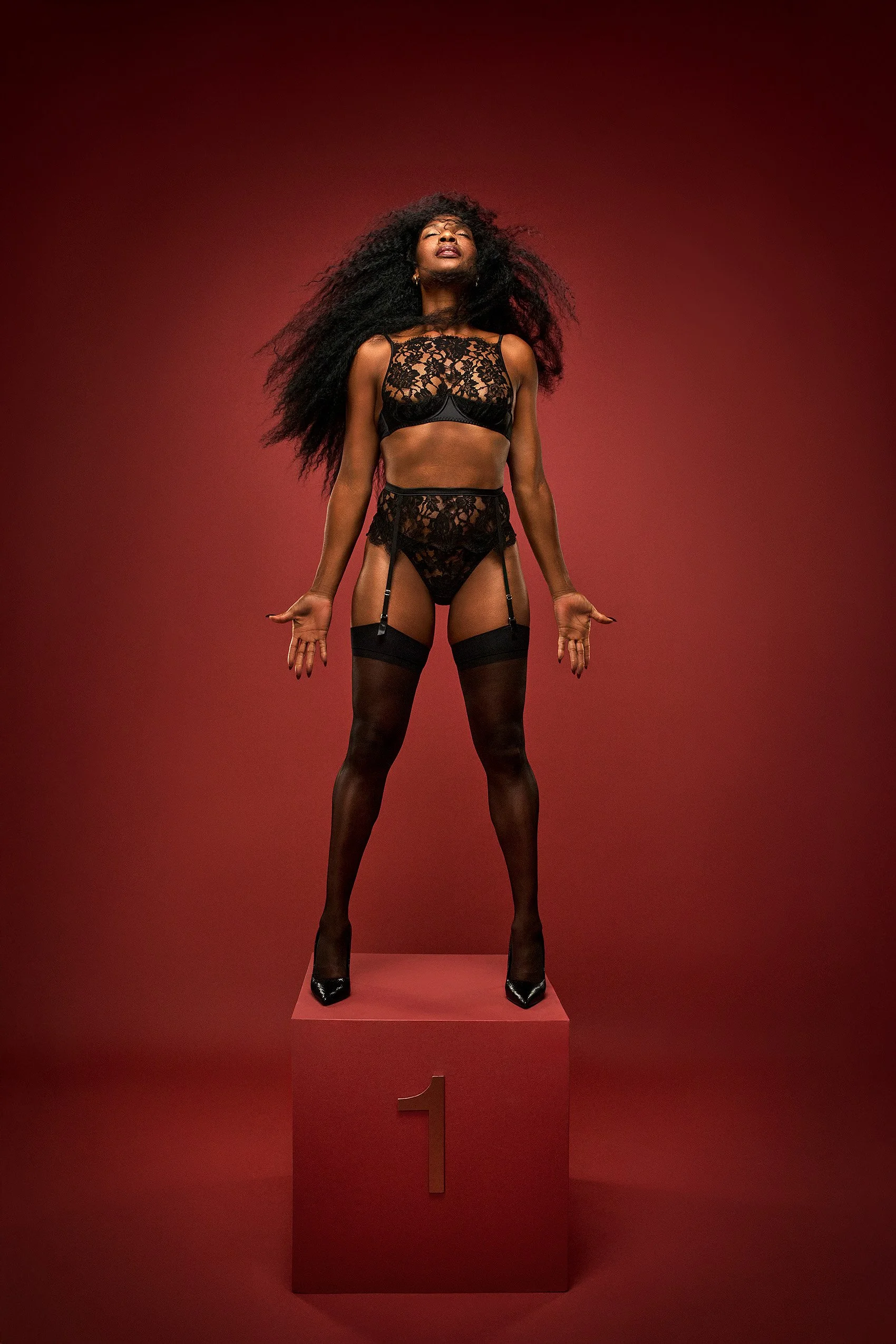
The language around female desire has evolved significantly in the last decade. Where do you think the conversation has genuinely progressed, and where is it still performative?
We’ve gone through a lot in the last decade. There’s no denying what an impact the pandemic had on the focus of our mental health and wellbeing, and what a brilliant shift that has created.
I feel like things have changed so much but then again there is still so far to go…
For 25 years, at Coco de Mer we have been committed to celebrating and championing pleasure for all, chipping away at the longstanding taboos around sexuality. From art to culture, education to pornography, the female perspective on pleasure in all its forms is little discussed or truly understood. And yet, from general happiness and confidence, to deepening and nurturing our relationships - and a fundamental appreciation of ourselves - knowing and owning female pleasure and sensuality really can be life-changing. And it is only now starting to get the attention it deserves.
It’s one of the true gifts of being a woman. Our capacity to experience it is innate, universal and human - and it’s never too late to start exploring its extraordinary possibilities. It’s why, through Coco de Mer, I wanted to create a Home of Pleasure - a safe place to discover its potential; with a brand built by and run by women, for women. I believe that pleasure done well fires all the senses; that sight, sound, taste, touch and smell are a system greater than the sum of their parts - and as women, we need the opportunities to fully explore the fun, joy and endless possibilities of our sexuality.
In conversations around pleasure, men are seemingly always confident in their voices. They have been taught about pleasure through formal education, the media, and society as a whole for their entire lives, while female pleasure is rarely acknowledged. Instead, the expression of female pleasure is often criticised, or scandalised, while the male counterpart is regarded, simply, as a fact of life. That’s why it feels like the conversation around female pleasure is one of the last taboos in our society.
10 years ago, Fifty Shades of Grey provided a step change in the world of erotica. It opened up people’s attitudes to BDSM and brought hidden desires to the surface. Since then, the world has continued to evolve and sex is discussed much more openly, but female pleasure is only now starting to get the attention it deserves.
At Coco de Mer, we hope to create a space for conversation and education through frank contributions to wider conversations, evenings of education and selection of products centred on female pleasure. It is this self acceptance, the sense of fulfilment, and the confidence, joy, and improved health that comes with education and uninhibited explorations of pleasure that I want to deliver to women. Pleasure and sexual fulfilment shouldn’t be regarded as luxuries; more women need to regard their own sexual satisfaction as a necessity.
We are seeing some attitudes going backwards which is so upsetting - particularly with contraception, abortion and the fundamental right for a woman to have control over her own body. We know that contraceptives are the greatest life-saving, poverty-ending, women-empowering innovation ever created - and no country in the last 50 years has emerged from poverty without expanding access to contraceptives. At the same time, empowering women is the most comprehensive, pervasive, high-leverage investment you can make in the human race.
The lack of education around female pleasure means that there is still an increasingly large orgasm gap in heterosexual relationships. The lack of conversation around female masturbation means that women are also less likely to orgasm alone. The complete opposite is the case for men - this isn’t only an accepted practice but something that entire movies have used for comedic value! While there has been a recorded increase in women buying sex toys and exploring their fantasies, we can’t disregard that many still assume needing lubricant is a personal failure, not reaching orgasm from penetration is something to be ashamed of, and pain during sex is normal.
The nature of female pleasure is complex and changes through the various stages of a woman's life from puberty to adulthood, pregnancy, and menopause; and yet, like masturbation and periods, menopause is something that women so rarely discuss. Despite the fact that over half of the population will go through the menopause and all its associated issues during their lifetime, doctors only have three hours training on the topic during medical school. It has been around for thousands of years - the Greeks first named it - and yet it is still a societal taboo. However, women like Davina McCall, Naomi Watts and Halle Berry are changing this attitude by talking more openly about it - and considering it a moment for reinvention rather than something secretive. This is a change that will have a fundamental effect on mid-life women’s mental and physical health in the future.
I have mixed feelings about social media - the benefits are plentiful, and we adore being able to connect with our community (when we’re not being shadow banned), but there is a performative nature to the algorithm. Looking at the world of celebrity is quite shocking at the moment, too - there is such a mould to the Hollywood look from head to toe - it’s not feeling very unique, or as diverse as it felt like it may have been heading. Having said that, we have women like Jane Fonda, Kate Winslet, Emma Thompson, Jameela Jamil, and our Icons - Pamela, Waris, Helena, and Charli - who are really shining through with such convictions, and such powerful beauty, very much as a result of staying true to themselves.
There is such a fond nostalgia around 2016 right now, but when we look at the conversations that are happening in 2026, compared to 2016 - Menopause, perimenopause, sex, self love, therapy, even the way we enjoy exercise is more celebrated, and to strengthen rather than reduce ourselves - we’ve come a long way in the world of female pleasure.
An uncomfortable truth lies with the barbaric, continued use of FGM. The campaign against this antiquated tradition has produced genuine, documented progress; more legal frameworks, more community-led abandonments, landmark convictions in the UK, and measurable falls in prevalence in countries like Kenya and Burkina Faso. However, the global picture remains deeply troubling. The 2030 SDG target of elimination looks virtually impossible to meet at the current pace, which just goes to show how truly vital the work of organisations such as The Five Foundation is for female agency to truly exist.
So many will agree, there is nothing more attractive than a confident woman, who knows and loves herself, and puts her pleasure first. That can’t be performed - it has to be felt. Agency really is key, and we still have so far to go.
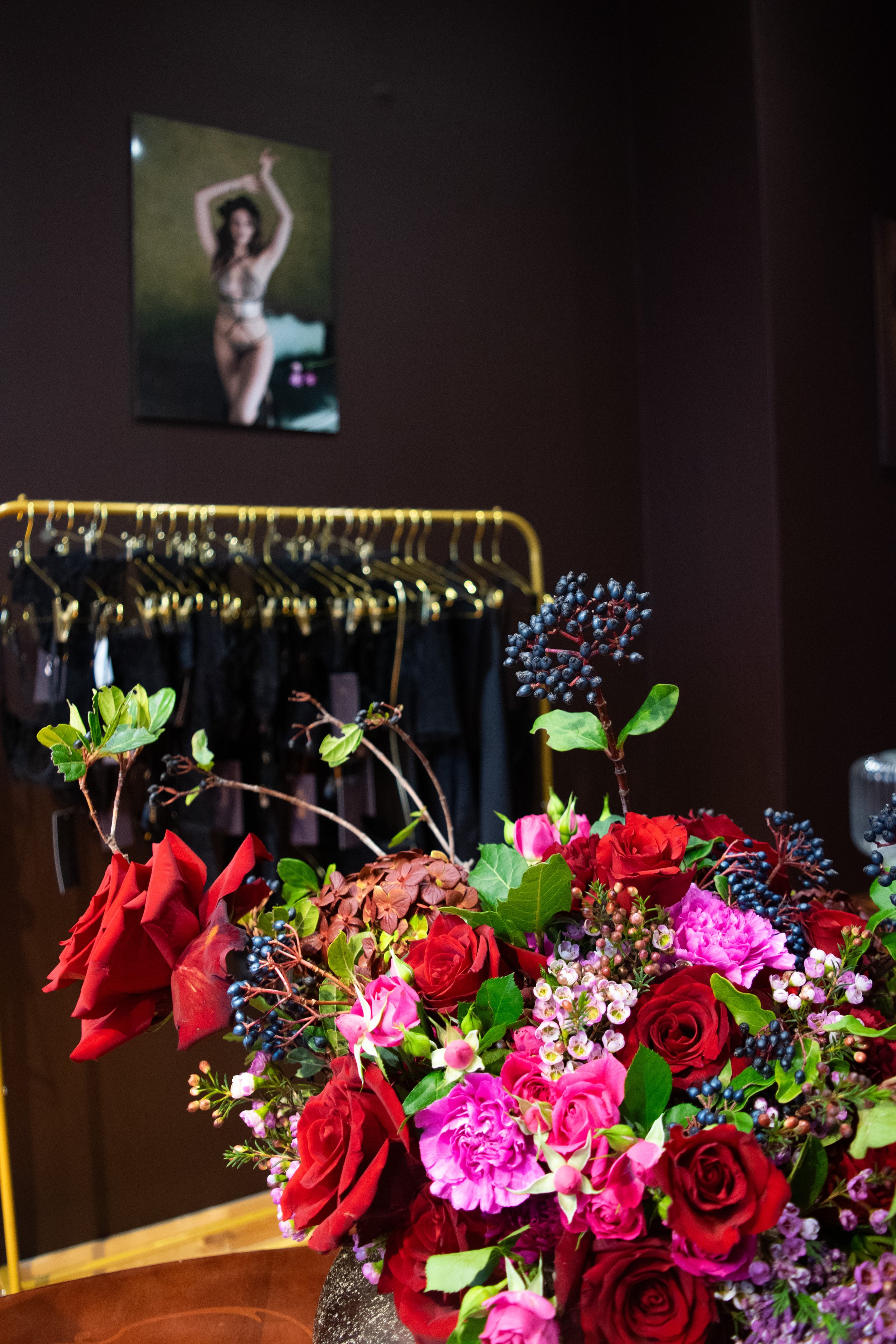
What have you learned about women’s spending psychology when it comes to pieces that are rarely seen by others?
The psychology of lingerie centres on "enclothed cognition" - when the lingerie we choose acts as a form of self-care, empowerment, and mood enhancement, rather than for the response of another. This is when the clothing a person wears influences their own thoughts, emotions, and behaviours through the symbolic meaning attached to that clothing - with lingerie very much included. This approach boosts confidence, improves posture, and provides a sense of personal, hidden, or controlled femininity, as the wearer sees fit. Empowering from the first layer…
Wearing lingerie is a form of self-care and a way to take control of one's own sexuality. It is an act of reclaiming sensuality in daily life, enhancing self-worth. The knowledge of wearing something intimate and beautiful beneath, even if hidden, can create a "spring in our step" and a sense of internal validation.
There are studies that show wearing a doctor's lab coat increased attention-related tasks and reduced errors by 50% compared to wearing a painter's coat or no coat, as the garment represents attentiveness; wearing formal clothing improves abstract thinking, whilst athletic gear can boost confidence or physical performance. It all makes sense - so why should we consider lingerie any differently?
The mind associates beautiful, “special” underwear with feelings of power, beauty, and confidence. Wearing it can lift one's mood and transform mundane moments into extraordinary ones. And if it’s worn to create a reaction as well, that chemical effect is heightened.
The hidden, nuanced intimacies are full of intrigue as well. Lingerie can feel like a "performance" of femininity, which can be liberating and equally evoking deep rooted emotions and taboos - allowing for a playful exploration of roles… Some food for thought, perhaps.
There’s an interesting link between how women invest in themselves and how they perceive their own value. Do you see lingerie as indulgence, armour, ritual, or something else entirely?
This is actually one of the reasons I wanted to work in this industry. I always found it surprising that lingerie was considered something you wore for someone else - when in fact it is the only item of clothing we wear that no one else sees - unless we choose to show it to them. I love that it is our secret power - something for ourselves above and beyond anything or anyone else.
So I would say all of the above - it’s such a fundamental layer for how we frame and see ourselves, it has such a significant impact, as trivial as it may seem at times. The price tag and experience are both equally an indulgence, but there is nothing like your favourite lingerie to bolster you for a meeting, a date, an experience…
Interestingly, old, tired lingerie can act as a sign of protest to our desires, a different type of armour entirely. But for me, the ritual of a beautiful lingerie set paired with a suspender belt and stockings has such an unbeatable effect on my confidence. Luxury has always thrived in moments of uncertainty by offering something grounding: beauty, craft, and human connection. Lingerie is such a beautiful part of that, and makes such sense as an investment of self care.
Personally, what does feeling powerful mean to you now, compared to ten years ago?
For me, feeling powerful is good health, abundant energy, financial independence and physical strength. And I feel these things are now much more celebrated for women and more a symbol of power than they have ever been.
Weightlifting has transformed my physical and mental attitude in the last 10 years. Although I always went to the gym, the benefits of lifting heavier and feeling it transform my wellbeing, my strength and my sense of power has been life changing.
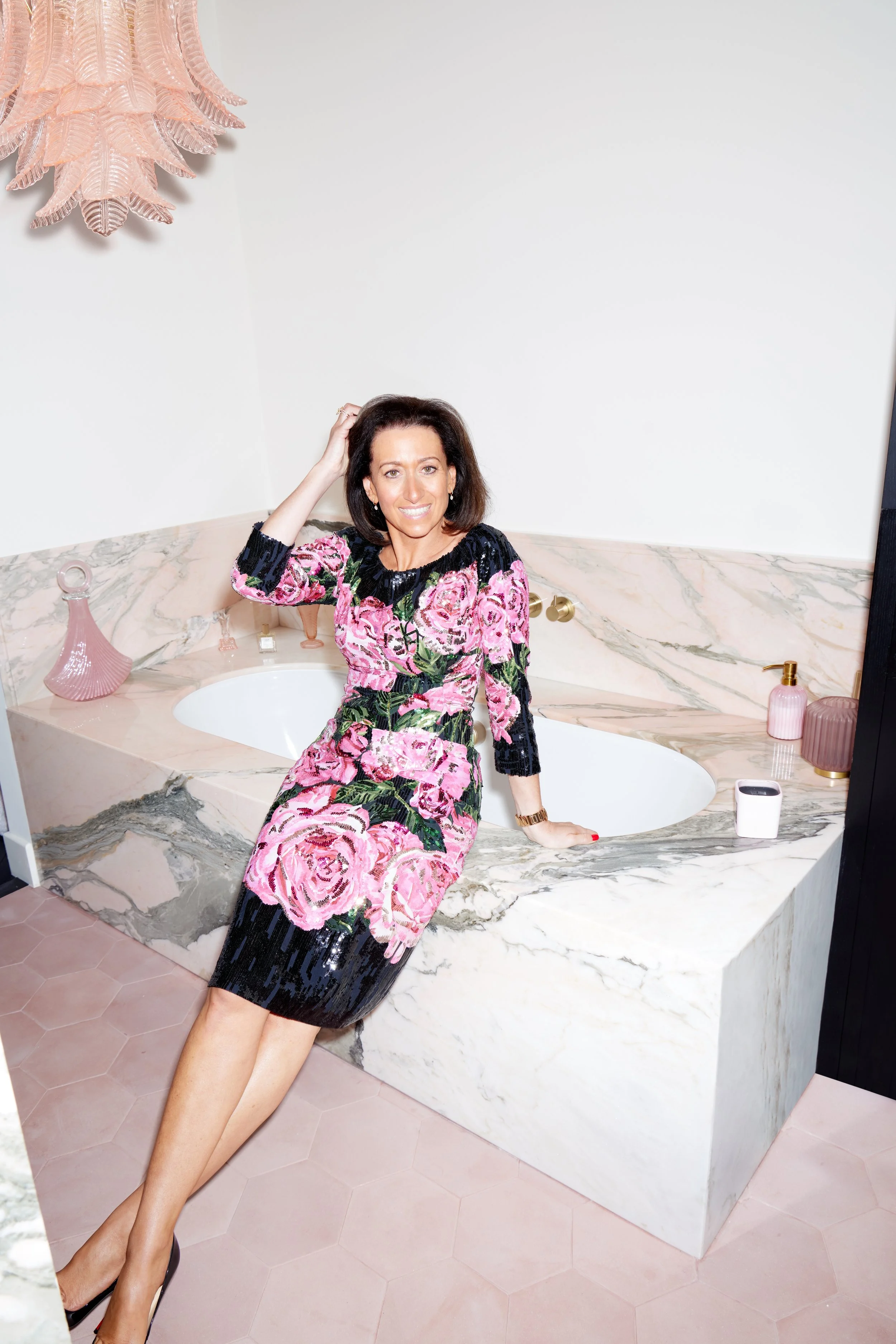
WEALTH
If we think about wealth beyond money, where does sensual confidence sit in that equation?
Sensual confidence is a wealth of self to me - knowing your worth in the most holistic sense. That feels like such a powerful foundation to then build the layers of wealth; the financial, physical and emotional - a truly sustainable wealth, built on your sense of self - what could be greater?
Describe your relationship with money and personal finance in three words?
Measured, aware, evolving.
How do you define wealth?
Wealth is freedom, time, health, friendships, security, and passion for what you do.
Although I would define wealth as more than just fortune, financial wealth certainly removes so many worries and more easily allows you to have the power to shape your work, your life and the world around you.
What money lessons did you learn when growing up? What would you have done differently?
Growing up with shopkeepers as parents meant I understood from very early on the different elements of running your own small business. That early exposure to all the pros and cons and the ups and downs was key to how I see the world today. Being a grafter and always working hard was instilled in me.
What would I have done differently? I know now that opportunities rarely come with a set of instructions. You need to take risks from time to time or you’ll never achieve anything. I wish I had risked more and risked earlier. My younger self had energy and time that I would happily have now. Your power to achieve, even at a very young age, is limitless.
What has been the most helpful tool for you to learn about money?
As with most things, I think doing is the only way we truly learn - so for me, it was working and budgeting from a young age - understanding what I spent and where.
Awareness - it’s the foundation for everything.
And exposure to financially aware people - asking questions and having open conversations.
How do you organise and manage your own finances?
I manage my finances in quite a structured and disciplined way, balancing my ambitions with careful risk management (drummed into me by my father!)
What is the best money decision you have made?
Buying Coco de Mer, without a doubt. Investing in my home is a close second though - my home gym and sauna have been life-changing, and my house really is my sanctuary.
What is your number one financial priority?
Probably financial stability - making sure I am prepared for unexpected expenses before taking on additional risk. I like to know that the foundation is solid - it’s the same in most other aspects of my life too.
How often do you talk about money with your friends?
Not very often - and generally only when times are tough! I should try and change that…
Which area of finance do you wish you knew more about, and why?
I’d like to deepen my knowledge of investing, and how to balance risk effectively. I’m really interested in learning how to invest in a structured and sustainable way. This was not something I was exposed to when I was younger and as someone quite risk-averse when it comes to finance, I think it would be super interesting - and useful.
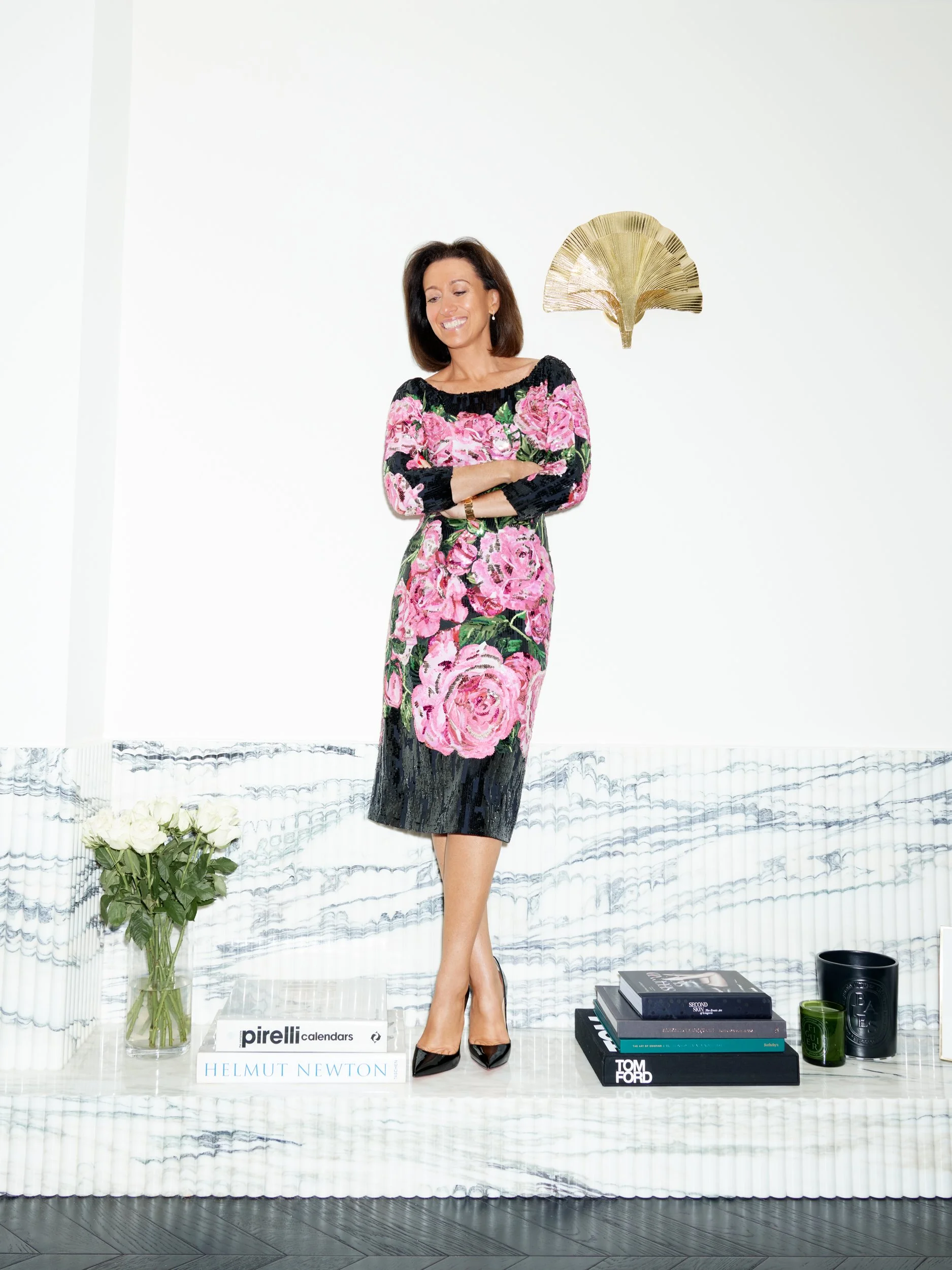
WELLNESS
What practices, physical or philosophical, keep you anchored when life gets chaotic?
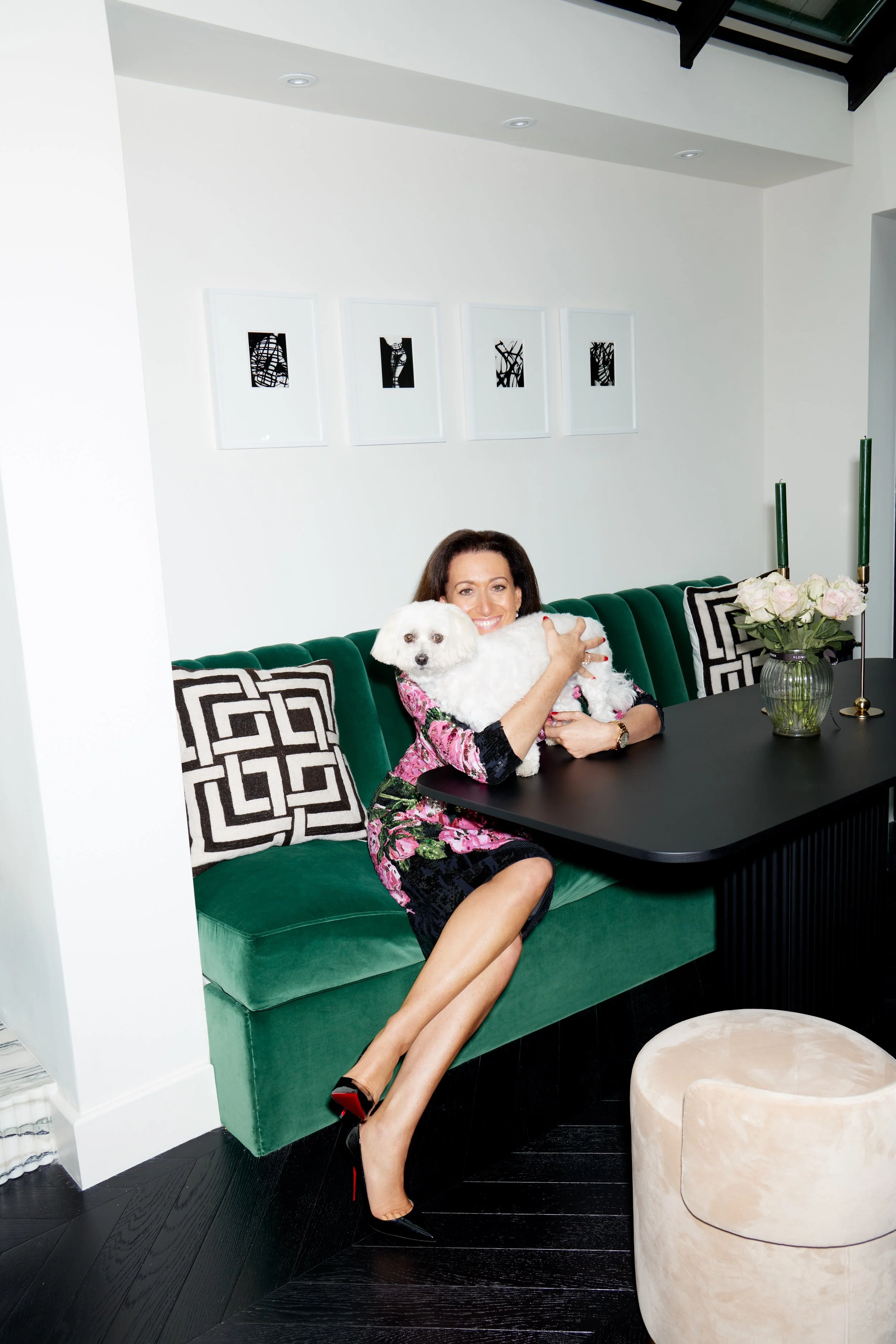
I really benefit from getting out of my head when chaos builds - so I love to move - be it a walk with my dog or a workout. Animals calm me. As does losing myself in a book - it really helps to reduce the noise.
Is there a particular place or person you turn to for inspiration?
I have had the great fortune, over the course of my career, to work for, and with, some of the most incredible people in this industry. And I have been, and still am surrounded by so many people from whom I learn so much.
Annie Leibovitz is a woman I find hugely influential. Her photography has always moved me - and I love how she portrays fashion as the serious business that it is, and women as not only beautiful, but admirable and strong.
I love women who on the surface may appear to be ‘dumb’, weak or controlled by men but who are actually underestimated, own their sexuality and use it to their advantage - who understand how powerful, and brilliant, they really are. Dolly Parton and Marilyn Monroe (the original influencer) are the embodiment of these women. They worked hard, were paid well and took creative control in a world not built to protect women.
Ruth Bader Ginsburg was everything I admire in a leader, using her intelligence, eloquence and female strength to push barriers. There is a quote of hers that I love, “Fight for the things that you care about, but do it in a way that will lead others to join you.” This is something I really try to emulate.
When it comes to a place that inspires; I love The Maine in Mayfair – walking into that vintage glamour, it feels like stepping away from the bustle of London and into a bygone world of elegant decadence. The dining room is so beautiful, I love the jazz evenings in the round and the cabaret evenings are sensational. I know several of the performers so it’s always a joy to watch them do their brilliant thing.
Claridges will always be a part of the perfect night out for me. From the moment I enter their lobby, I feel like I’m in heaven. Le Fumoir bar is my dream bar - intimate, dark, and an art Deco delight. There have been many lost evenings spent there.
Do you have a morning routine to set you up for a productive day?
Every day begins with an early walk with my dog, Charlie, and working through the emails that have come in overnight. I have a trainer and work out 3-4 mornings a week, it really helps me to reset, and as something of an insomniac with an overactive mind, lifting weights helps me to focus.
What are you currently reading and listening to?
I’ve just finished All Fours by Miranda July and The Lovers by Paolo Cognetti, both of which were so good. Next on my list is The New Age of Sexism by Laura Bates.
I’ve always got a couple of business books on the go as well - I often go back to Stretchonomics by Nick Pye and Justin Wright, which I think is such an interesting read.
One of our Icons, Charli Howard, has just published a book called Flesh, which I also can’t wait to read.
One ritual that never fails you?
Self love is so important, and it truly resets everything - a ritual to be treasured. Taking the time to switch off and check in with yourself, however that may manifest, can be transformative.
A book or idea that changed how you see the world.
Many books but these 4 immediately come to mind…
Desert Flower by Waris Dirie (this was the book that ignited my work in the fight against FGM, and Waris became our Icon in 2017), Invisible Women by Caroline Criado Perez, The Moment of Lift by Melinda Gates and The War on Women by Sue Lloyd-Roberts and Sarah Morris.
The sound, scent, or space that instantly grounds you?
Palm Springs is somewhere that has always calmed me.
For a more immediate grounding, it has to be my bathroom - it’s a beautiful mix of Calacatta rose marble, pink murano glass and fluting - just heavenly, and with our Roseravished Massage Candle lit - the blend of rose and sandalwood is sensual and heady - it roots me, and also feels so wonderful on the skin.
And finally; what does ‘enough’ mean to you?
‘Enough’ definitely evolves over time. It’s a feeling. It’s being at the point where you’re not constantly chasing more just for the sake of it. It’s inner contentment - for me, somewhere ambition and contentment can co-exist - because there will always be a part of me that will want to achieve more in certain aspects of my life but finding the balance and feeling grounded in the other areas is what creates that sense of fulfilment and peace.