Introducing Yulia Rorstrom | Founder and CEO Duck & Dry
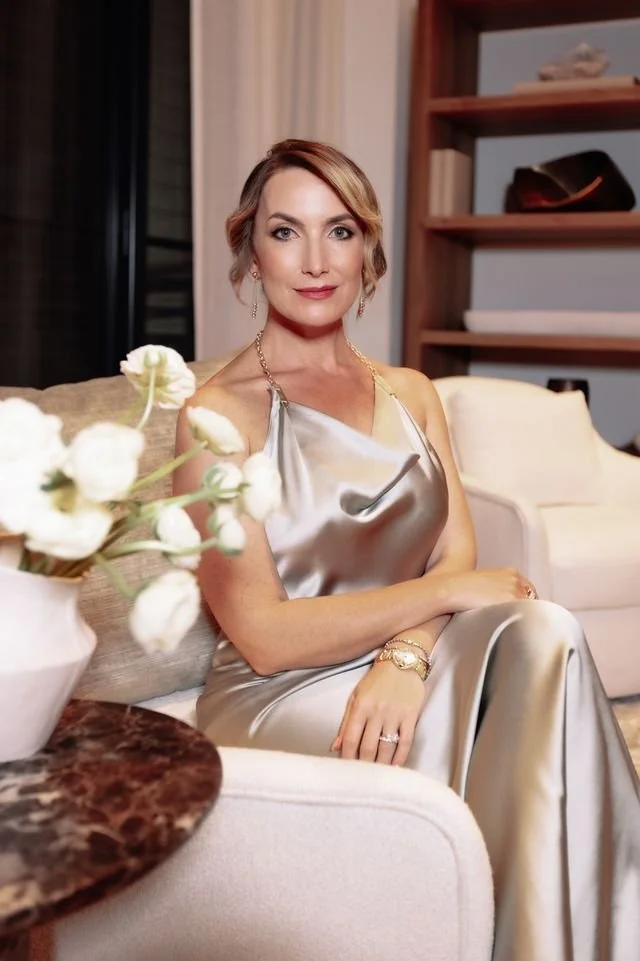
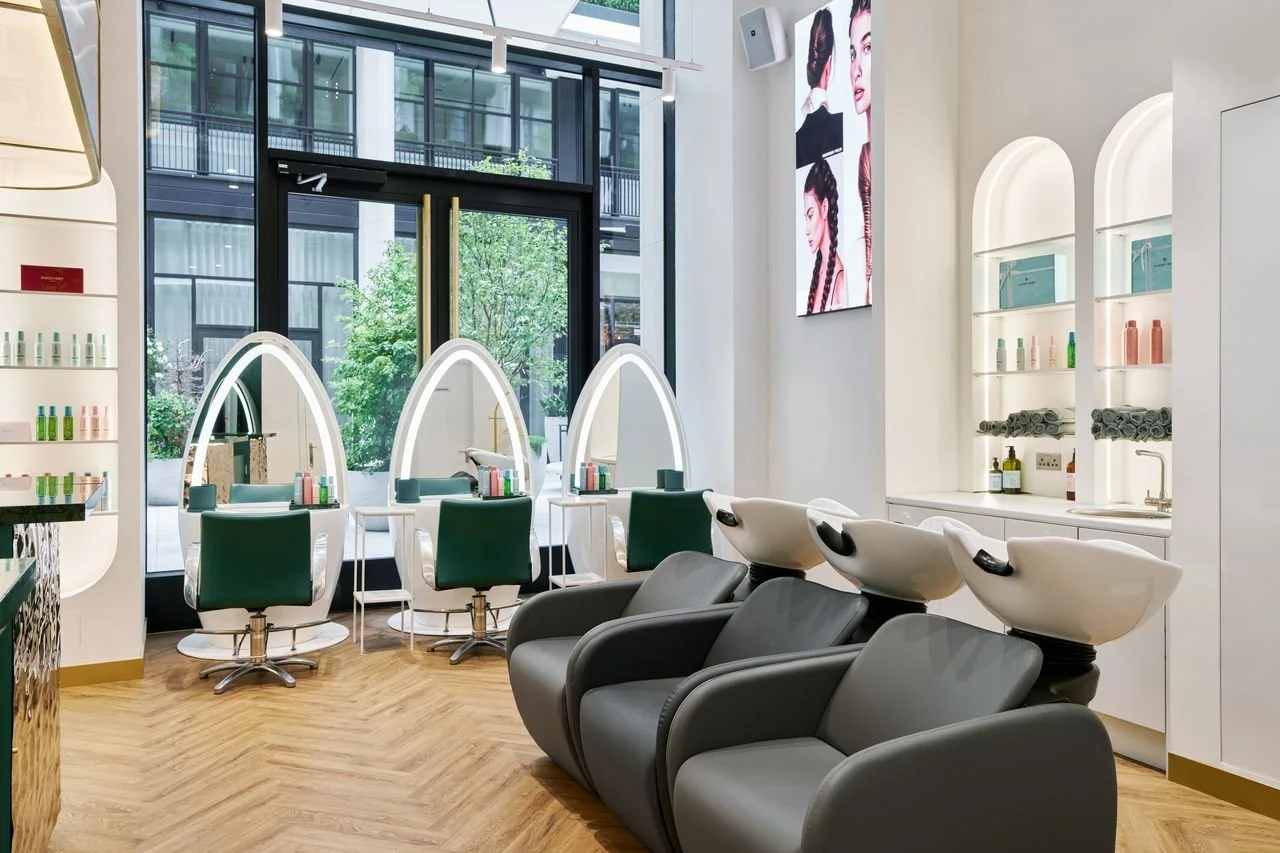
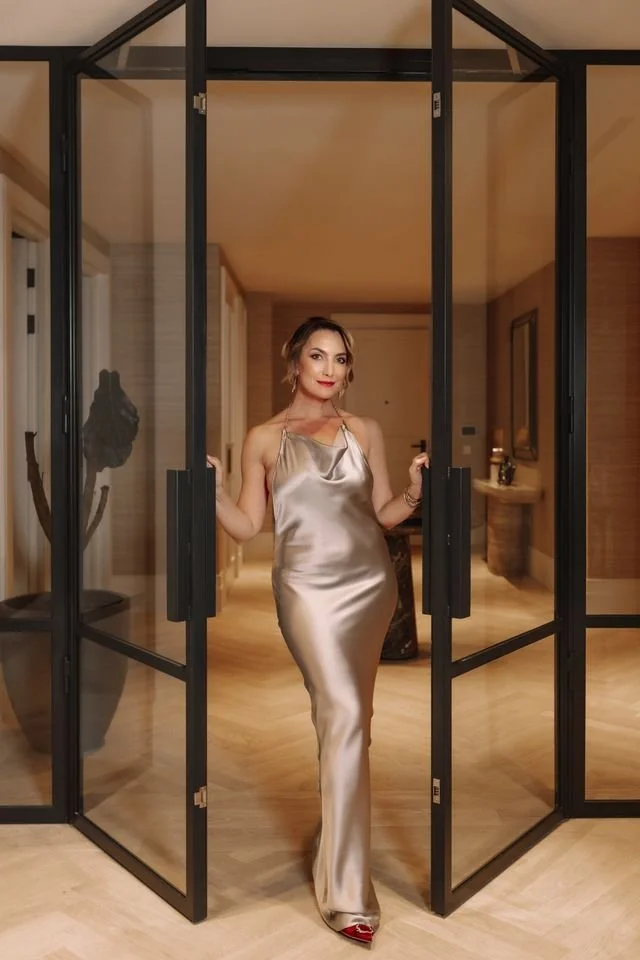
meet Yulia Rorstrom, the Founder and CEO of Duck & Dry, the award-winning London blow dry and styling brand. With a background in finance and consulting, Yulia stepped away from the corporate world to launch Duck & Dry in 2014, bringing a fresh perspective to the traditional salon experience. What began as a single Chelsea salon has evolved into a recognised London beauty brand, with multiple locations, a signature haircare range and ambitious international expansion plans. join us as she shares her Passion about entrepreneurship, innovation and creating memorable customer experiences, Yulia continues to lead Duck & Dry's growth while championing a modern, accessible approach to beauty.
WEBSITE | INSTAGRAM
“I'm originally from France, with a background in property, law and business. After years of delivering real estate projects for private clients across Europe, I became very familiar with the challenges of owning a home abroad, from finding the right property to renovating, designing and managing it. I wanted to find a better, simpler way to enjoy the places we love, which led me to create August. Alongside my work, I'm passionate about philanthropy and community development. I founded Foyer Imuhira in Burundi, a charity providing homes, education and long-term support for children who have been living on the streets.”
What made leaving finance and consulting feel inevitable rather than reckless?
I don't think leaving a successful career to start something completely new ever feels entirely risk-free! But my background in finance and consulting meant I approached the decision with a commercial mindset.
I had always wanted to build something of my own, and I could see a genuine opportunity in the market. Women were increasingly looking for beauty services that fitted around their busy lifestyles, but the traditional salon experience hadn't really evolved to reflect that.
For me, the calculation changed when I realised this wasn't simply about opening another hair salon. There was an opportunity to create an entirely different beauty experience, with a strong brand and a business model that could grow.
What was London's beauty market failing to understand about experience-led service?
Travelling to the US and Japan opened my eyes to how beauty services could become part of everyday life. London was still very focused on traditional salons, where blow dries were an add-on rather than the main experience. I wanted to create something convenient, stylish and social, where getting your hair done was as much about the experience as the result.
What did having no beauty industry background cost you, and what did it allow you to see?
There was certainly a steep learning curve, particularly around salon operations and understanding the technical side of hair. But not coming from the industry also meant I wasn't restricted by traditional ways of thinking. I approached Duck & Dry as a customer first, focusing on the brand, experience and what women actually wanted.
Which expansion decision demanded the most recalibration?
One of the biggest lessons has been understanding that every location is different. What works in Chelsea won't necessarily work in Mayfair or Battersea. Customer habits, footfall and local demographics all play a role. Expansion has taught me the importance of adapting to each market while maintaining a consistent brand experience.
Growth isn't simply about opening more doors. It's about making sure every new location strengthens the brand and makes commercial sense.
How much of the product formulation process do you still control?
I've always been very involved in the vision behind our product range, particularly what the products should deliver and how they should fit into the Duck & Dry experience.
Our products are designed to bring that salon-quality feeling into everyday haircare, combining effective formulations with beautiful branding and ease of use. But I'm also a firm believer in surrounding yourself with people who know more than you do in their specialist fields.
Formulation is a science, and it's important to trust the expertise of the people developing and testing the products. My role is to make sure the finished product delivers on our brand promise and is something our customers genuinely want to use.
How much of your entrepreneurial instinct was inherited?
Growing up in an entrepreneurial family certainly shaped my mindset and gave me an appetite for building something of my own. But running a business is a completely different experience. You learn the most when you're making decisions, taking risks and dealing with challenges yourself. A lot of my confidence has come from those experiences.
Was there a financial trade-off between growing the salons and investing in products?
As a founder, you're constantly balancing priorities and deciding where to invest. Our salons and product range complement each other, but both require resources. I've always approached investment with a long-term view, focusing on opportunities that strengthen the brand and create sustainable growth rather than simply expanding for the sake of it.
What's the biggest misconception about the economics of running a beauty retail business at scale?
People often underestimate how operationally demanding the beauty industry is. A busy salon doesn't automatically mean a profitable business. Between rent, staffing, training and maintaining service standards, there are significant costs involved. The real challenge is delivering a consistently brilliant customer experience while building a commercially sustainable business.
WEALTH
If we think about wealth beyond money, where does health sit in that equation?
Right at the top. You can build a successful business and have financial security, but if you don't have the health or energy to enjoy any of it, your definition of wealth becomes quite limited.
As I've got older, I've definitely started thinking about wealth much more broadly - health, time, freedom and the people you get to spend that time with are all part of it.
How do you think about long-term wealth building outside of Duck & Dry itself, if at all?
I believe in diversification. When you're a founder, you're naturally very invested — financially and emotionally - in your own business, so I think it's important to build security outside of it too.
My approach is generally long-term rather than chasing short-term returns. I like understanding what I'm investing in and thinking about where something could be in ten or twenty years and how those assets can benefit my children in the future.
Describe your relationship with money and personal finance in three words.
Disciplined, considered, long-term.
How do you define wealth?
Freedom and choice.
Money is obviously part of that, but real wealth to me is having control over your time, being able to look after the people you love and having the freedom to make decisions based on what you want to do rather than what you have to do.
What money lessons did you learn when growing up? What would you have done differently?
I grew up understanding that money had to be created rather than simply spent. Coming from an entrepreneurial family, I saw the connection between taking risks, working hard and building something of value.
If I could change anything, I probably would have started thinking about investing and compounding earlier. When you're young, time is one of your greatest financial advantages and you don't necessarily appreciate that until later.
What has been the most helpful tool for you to learn about money?
Probably experience. My background in finance gave me the foundations, but there is a big difference between understanding finance theoretically and being responsible for real money in a business.
Running Duck & Dry has taught me more about cash flow, investment and risk than any textbook could have. When every decision has a consequence, you learn very quickly.
What's a piece of financial advice, from a mentor, an investor, or each other, that changed how you run the business?
“Revenue is vanity, profit is sanity, cash is reality.”
It's a simple principle, but particularly important when you're growing. A business can look incredibly successful from the outside and still have unhealthy economics underneath it. I've always tried to stay focused on the fundamentals rather than growth for growth's sake.
What is the best money decision you have made?
Investing in myself and building Duck & Dry.
Starting a business is obviously a financial risk, but it has also been the greatest education and opportunity I've had. Regardless of the numbers, creating something from nothing and watching it grow has been an extraordinary return on that original investment.
What is your number one financial priority?
Long-term financial independence. For me, that means building security while still having the freedom to take calculated risks and invest in opportunities I believe in.
How often do you talk about money with your friends?
Probably more openly now than I did when I was younger. I think money is something people can still feel uncomfortable discussing, particularly women, and I'd like to see that change.
Some of the most useful things I've learnt have come through honest conversations about investing, mutual business opportunities and mistakes. We should be able to talk about money without it being about status.
Which area of finance do you wish you knew more about, and why?
I’d like to learn more about investment opportunities beyond traditional asset classes like equities and property. I’m particularly interested in natural assets and agriculture, and understanding how they can play a role in a broader investment portfolio.
WELLNESS
What's a wellness trend you'd push back on?
Anything too complicated.
I'm quite sceptical of the idea that wellness needs to involve a complicated routine, dozens of supplements or the latest optimisation trend. I think the basics are still incredibly powerful: sleep, movement, eating well, relationships and looking after your mental health.
Wellness shouldn't become another source of pressure.
What practices, physical or philosophical, keep you anchored when life gets chaotic?
Perspective is a big one for me. When you're running a business, everything can feel urgent, but very few things are actually catastrophic.
I try to step away, move, spend time with family and create some distance from whatever problem I'm dealing with. Often the answer becomes much clearer once you've stopped staring at it.
Is there a particular place or person you turn to for inspiration?
Travel has always been a huge source of inspiration for me. Duck & Dry itself was partly born from observing beauty concepts internationally, and I still find that being somewhere different makes you notice things you stop seeing in your everyday environment.
I'm inspired by people too — particularly founders who have built brands with real longevity rather than simply following what's fashionable at that moment.
Do you have a morning routine to set you up for a productive day?
I'm not someone with a perfect two-hour morning routine — and I think that's important to admit!
With two young children, mornings can feel chaotic with multiple lunch boxes and school run so I enjoy a 30 minute yoga to re-focus. I am also a great believer in traditional pen-on-paper 'to do lists' and I tend to re-write them daily clearly prioritising what needs my attention on that day.
What are you currently reading and listening to?
I am reading London Falling at the moment about the corrupt underworld of modern London. I tend to enjoy non-fiction that still reads like a novel but has true to life themes and people.
A book or idea that changed how you see the world.
I really enjoyed Shoe Dog by Phil Knight, the memoir of Nike’s co-founder and tells the story of how Nike grew from a tiny shoe-import business into a global brand. It really resonated with me as a founder because it strips away the polished version of entrepreneurship and shows what building something actually feels like.
What struck me most was the level of financial risk Phil Knight carried for years- he was constantly stretched, borrowing, reinvesting everything, fighting for cash flow and living with the reality that almost any day could have been the last.
That feeling really connected with me. As a founder, there are moments when you're carrying enormous pressure while still having to show up, make decisions and convince everyone around you that the vision is going to work.
What I took from Shoe Dog was the importance of perseverance.
The sound, scent, or space that instantly grounds you.
I am lucky to spend a lot my down time in the south of Italy, where busy London life instantly slows down - freshly picked oranges at breakfast, morning markets, a good book, nature and family. A reminder to slow down, feel grounded and enjoy the simple things. It really transformed my life to have this 'happy place' to go to and switch off.
And finally, what does ‘enough’ mean to you?
Enough is reaching a point where ambition comes from curiosity and purpose rather than fear or comparison.
I'm naturally ambitious and I don't think I'll ever stop wanting to build or create things. But there is a difference between wanting more because you're excited by what's possible and constantly feeling that what you already have isn't sufficient.
For me, enough is being grateful for what you've built while still being excited about what comes next.