
Introducing Lucy Goff | Founder and CEO of LYMA

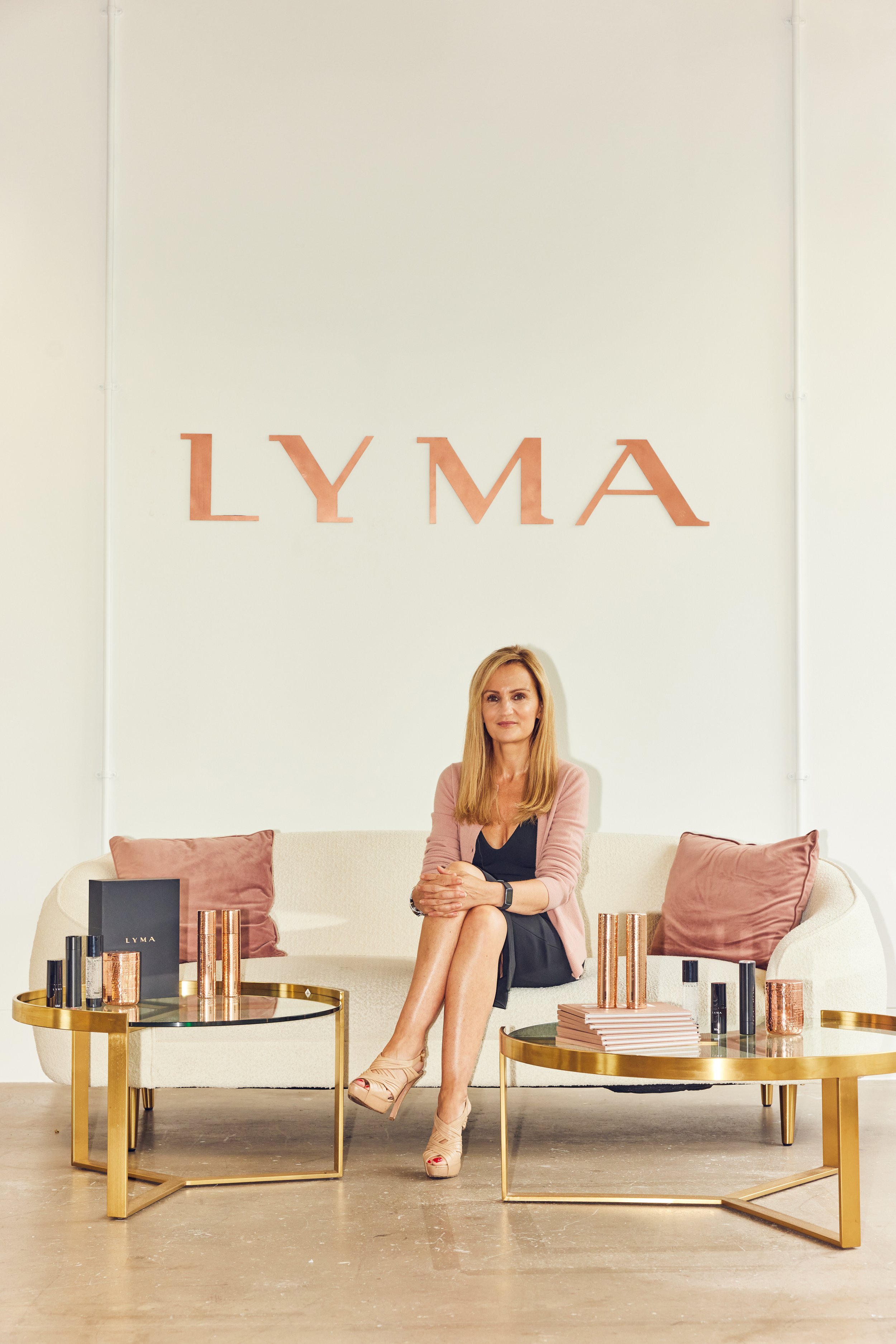
Meet Lucy Goff, founder and CEO of LYMA, the luxury regenerative MedTech company she built after a near-fatal bout of septicaemia following the birth of her daughter changed the course of her life. A former fashion journalist and luxury PR, Lucy had no plans to become an entrepreneur until a chance encounter in Geneva with Professor Paul Clayton, a world authority on pharmaconutrition, introduced her to a category of evidence-based supplementation the supplement industry had no interest in acknowledging. She left her career, self-funded the business after every investment fund turned her down, and sold out within two weeks of launch. Today, LYMA spans the supplement, the Laser PRO and a geneticist-developed skincare range, reporting $48 million in revenue for 2025. Named on Forbes's inaugural 50 Over 50 global list and recipient of a King's Award for Enterprise, she started the company at 43 and proved every investor wrong. Join us as we explore what it takes to build on science in an industry built on marketing, and why the best investment a high-achieving woman can make is the one she makes in herself.
WEBSITE | personal LINKEDIN | INSTAGRAM

“I'm Lucy Goff, originally from Leeds, now based in London, a mother of two, and the Founder and CEO of LYMA.
I spent the earlier part of my career in fashion journalism, then luxury PR, before founding LYMA in 2018. After being hospitalised with septicaemia following the birth of my daughter, I was discharged six weeks later "medically well," despite never having felt worse. I tried supplement after supplement looking for something that actually worked, and found nothing. Then I met Professor Paul Clayton, a world authority on preventative disease, and together we built a protocol that finally helped me recover. What I came to realise was that while my situation was singular, my symptoms weren't. The only difference between me and every other woman struggling with the same thing was access to Clayton's science. That's why I created LYMA: to close that gap. The protocol became the LYMA Supplement, proven medical science, converted into consumer-facing products.
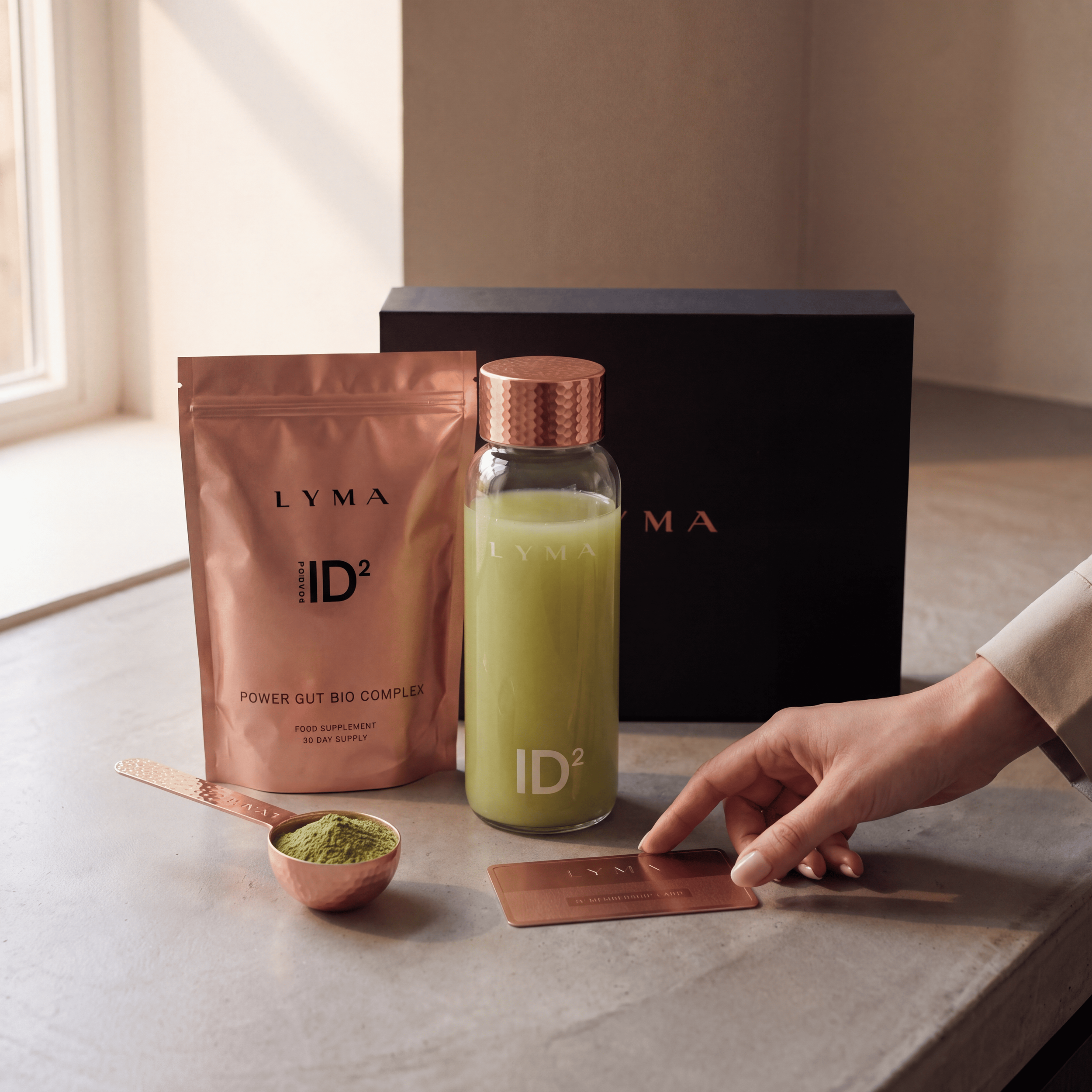
Women have been sold hope dressed up as evidence for too long. From my personal experience I knew that proven, peer-reviewed science belongs in daily life, not locked away in a clinic. That belief now spans four product categories: the LYMA Laser and Laser PRO, the first FDA-cleared cold lasers for home use; the LYMA Supplement, which remains the gold standard in evidence-based nutraceuticals; and, new in 2026, ID², a four-dimensional gut reset, and LYMA Skincare, clinically tested across the five signs of skin ageing. It's about proof, not promises, with products that actually deliver, not just claim to. That belief is the reason LYMA exists at all.”

You were in your late thirties, newly a mother, and fighting for your life in an ICU. Most people would emerge wanting rest, not a business. What made you want to take on an entire industry?
The illness wasn't the catalyst, my recovery was. It took so long, and what finally worked was so far outside anything the mainstream had offered me, that I became obsessive about understanding why. Why were the products I'd tried so ineffective? Why was properly formulated science so inaccessible? Why was the industry allowed to keep selling hope dressed up as evidence?
The answers were uncomfortable. It wasn't failing by accident, it was built on under-dosed, unvalidated products because that was cheaper and easier, and consumers had been conditioned not to expect more. Having felt what happens when you give the body what it actually needs, the status quo didn't just disappoint me, it felt wrong.
The supplement aisle is full of confident claims and products that deliver very little. LYMA charges a significant premium on the basis that it's different. How do you explain that distinction to a consumer who's already been burned?
I don't try to persuade anyone. I tell them my story and then show them the science, because I was that consumer, the woman who'd spent money on products that did nothing and quietly started to assume that was just how it was. We also have genuine authentic stories and case studies of customers we’ve helped.
The distinction is specific and verifiable. Every LYMA ingredient is patented, peer-reviewed, used by professionals in longevity and regenerative medicine, and dosed at the level clinical trials prove effective, not a gesture towards it, the actual level. When someone's been burned before, I'd rather they read the evidence than take my word for it. It isn't ambiguous.
You built LYMA on pharmaceutical-grade science and then surrounded it with a luxury aesthetic. Was the luxury positioning always intentional, or did it come later?
Always intentional, though it came from instinct rather than strategy. My background was in luxury PR, and I'd spent years watching how products were sold to women—beautifully packaged, but so often failing to deliver. I wanted to combine the effectiveness of medical-grade, scientifically proven products with a genuinely luxurious experience.
Jo Malone was always an inspiration—what she did with the candle, taking something functional and making it the very best it could be, in how it worked and how it looked. That's what I wanted for LYMA. Every part of the design is considered: the LYMA Supplement comes in a hammered copper vessel, made to be a beautiful addition to your kitchen counter, not something hidden in a cupboard. And as I've said before, as a woman interested in fashion, my ideal was for the LYMA Laser to fit inside a bag like a Chanel 2.55. It's a clinical breakthrough, and it should also feel extraordinary to hold.
You seed-funded LYMA yourself and only brought in external capital once the product had proved itself. What does your fundraising journey say about the right sequencing of capital?
I can only speak from my own experience, but proof should come before capital. Every firm I approached said no, they didn't believe anyone would spend £150 a month on a supplement when cheaper options existed. So I self-funded from my kitchen table, and we sold out in two weeks. Proving the model first changed everything. It gave me leverage, not just commercially but in protecting what made LYMA what it is. My advice to anyone thinking of founding is simple: get as far as you can on your own before bringing in outside money. Proof changes every room you walk into.
Pembroke's CEO Andrew Wolfson has noted that while other investors told you to "come back later," Pembroke recognised you as a visionary founder. What was different about that meeting, and what did you understand about your business that the others had missed?
Pembroke actually listened, which sounds simple but was genuinely rare. It's hard to grasp now how far the longevity and wellness space has moved, no one would blink at the price of our Laser or Supplement today, but back then the precedent didn't exist and we were carving out a space that didn't either.
The investors who turned us down couldn't see a template for what we were doing. Pembroke could see where the industry was heading. We were clinic-grade technology in luxury packaging, founded by a former journalist, built on science most of those rooms had never encountered, creating categories that didn't yet have a name.
What I understood, and Pembroke grasped, was that the consumer was already ahead of the market. Women were done being failed by this space, the frustration was enormous and obvious if you were paying attention, and I was, because I'd lived it. The other investors were looking backwards. Pembroke was willing to look at where things were clearly going.
The Dura Society sits at the intersection of wealth, well-being and agency. In your experience, what does financial confidence, or the absence of it, actually do to how a woman approaches her health?
When a woman doesn't feel financially secure, her health is almost always the first thing she quietly lets go of. Not because she doesn't value it, but because the maths of what she can justify spending on herself turns brutal very quickly. What I've seen, in my own life and through LYMA's customers, is that financial confidence and investment in your own health move together. When women feel real agency over their money, they stop treating their health as a luxury they haven't yet earned. That shift is everything.

WEALTH
How do you define wealth?
Empowerment, options and time. Making decisions from choice rather than necessity, and the freedom to do what actually matters.
What has been the most helpful tool for you to learn about money?
Honestly, necessity. When you remortgage your house to fund a business every investor has turned down, you learn fast, there's no safety net and every penny has to be strategic. It's terrifying, but it's the most clarifying financial education there is. I also learned a huge amount from other founders who talked openly about their numbers, those conversations were worth more than any book.
What is your number one financial priority?
Security for my children. Everything else is secondary.
Which area of finance do you wish you knew more about, and why?
Cash flow. When you're self-funded and growing fast, the gap between revenue and reality can be brutal, and I wish I'd understood it more deeply at the start. I learned on the job, and some of those lessons were harder than they needed to be.
WELLNESS
What practices, physical or philosophical, keep you anchored when life gets chaotic?
Movement, mornings without a phone, and remembering that chaos is usually progressive not catastrophe. When everything feels unmanageable, it normally means something needs to change, and getting curious about what tends to be more useful than pushing through. I also take the LYMA Supplement every day, and I notice when I don't.
Do you have a morning routine to set you up for a productive day?
It usually starts earlier than I'd choose, woken by one of my children! I try to stay off my phone until 8am, which isn't always possible running a business, but I set the intention. Hot water and lemon, the LYMA Laser PRO while I get ready, the Supplement after breakfast. Simple, consistent, non-negotiable.
A book or idea that changed how you see the world.
That prevention is the most radical act. We've been conditioned to wait for illness and then treat it, but regenerative medicine shows that early intervention changes outcomes profoundly. Once you really understand that, the old reactive model is very hard to go back to. It changed how I built LYMA and how I live.
And finally, what does "enough" mean to you?
Knowing LYMA played a real part in changing the standards of an entire industry. A world where companies can no longer profit from genuine concerns with under-researched, over-promised products, and where legislation finally holds every brand to a higher standard. Women have been let down for too long by an industry that puts marketing over evidence. Enough, for me, is that no longer being acceptable.