Deeds of Variation: The Unsung Hero of Estate Planning
In our latest Essential Series webinar, Rachel Mayston and Sarah Nettleship from Thomson Snell & Passmore unpacked the intricacies of deeds of variation, a powerful yet often overlooked estate planning tool. Discover how this mechanism allows beneficiaries to redirect inheritances, mitigate tax exposure, and reshape estates posthumously, all while navigating the complexities of family dynamics and legal technicalities. From correcting lopsided distributions to optimising charitable giving, deeds of variation offer a rare opportunity to revisit and refine an estate after death. Join us as we explore the nuances, considerations, and transformative potential of this unsung hero of estate planning.
At its core, a deed of variation allows a beneficiary to redirect their inheritance within two years of the death, with the redirection treated, for tax purposes, as if it had been made by the person who died. As Nettleship explained, "It's a gift with special tax consequences. Ordinarily, if you give something away and die within seven years, that gift gets pulled back into your estate. A deed of variation bypasses that entirely."
The implications of that bypass are profound. Consider an aunt leaving £500,000 to a niece who doesn't need the funds, while a cousin struggles to buy her first home. Gifting the sum to the cousin ordinarily puts the niece on a seven-year inheritance tax clock. Do the same via a deed of variation, and it's as if the aunt had left the money to the cousin directly (the niece's estate is unaffected).
But tax efficiency is just one reason to turn to this tool. Fairness is another, particularly when a will inadvertently produces a lopsided result. Mayston shared the story of a mother who left her estate to three of her four children, excluding the fourth after a falling out. The three beneficiaries, wanting all siblings to be treated equally, each varied a portion of their inheritance to the excluded brother, ensuring a 25/75 split that felt truer to their family values.
Most commonly though, Nettleship sees deeds of variation used for strategic tax planning, often involving trusts. "Redirect your inheritance into a trust instead of taking it outright, and you can still be a beneficiary, still access funds if needed, all while keeping the sum outside your estate for inheritance tax." Achieving the same with one's own assets faces far tighter restrictions. "Done properly, a deed of variation opens a door that doesn't otherwise exist."
The tool can also remedy situations where someone dies intestate (without a will), where statutory rules often create unnecessary tax exposure. In England and Wales, intestacy divides the first £270,000 of an estate between spouse and children, with the remainder split equally between them (a formula ripe for revision). Adult children can vary their share back to the surviving parent, restoring the spousal exemption a proper will would have provided. "It's a fix, not a substitute for planning ahead," Mayston clarified, "but a meaningful one."
Perhaps the most elegant use case, however, is in charitable giving. In the UK, leaving 10%+ of an estate to charity drops the inheritance tax rate on the rest from 40% to 36%. For estates just shy of that threshold, a deed of variation lets beneficiaries top up the charitable bequest to secure the lower rate for the entire estate. The charity gets more, the beneficiaries get about the same thanks to the tax savings, and HMRC gets less. "It's a rare win-win-win in estate planning," noted Nettleship.
Not every situation resolves so tidily, of course. Deeds of variation can't compel agreement among beneficiaries, a limitation felt acutely in blended families. Mayston recalled a case where children from a first marriage inherited everything, leaving the second spouse grounds for a claim. Varying that claim would have violated anti-avoidance rules, forcing a different solution. The lesson? "A well-drafted will, put in place while everyone can still voice their intentions, will always achieve more than a deed of variation can retrofit later."
Both experts stressed that deeds of variation are not DIY territory. Strict drafting rules mean an apparently valid deed can be voided by technical missteps, triggering unintended tax consequences. "These are binding legal documents," Nettleship emphasised. "They need qualified hands."
The webinar's key takeaway was clear: estate planning doesn't end at death. For beneficiaries and testators alike, understanding that deeds of variation exist (and that the window to use one closes two years after a death) is crucial. In the right circumstances, with proper advice, they're a tool that can reshape an inheritance across generations. Not a cure-all, Mayston and Nettleship underscored, but for those who grasp their power, a potent and often underutilised route to posthumous estate optimisation.
Your Deed of Variation Checklist: 5 Essential Considerations
While deeds of variation offer immense flexibility in estate planning, they also come with strict requirements and potential pitfalls. Before pursuing one, be sure to tick off these five key boxes:
Check the clock: You have just two years from the date of death to put a deed of variation in place (no exceptions). Whether you're the one leaving the estate or the one set to inherit, understanding this window is critical.
Get everyone on board: All beneficiaries affected by the variation must agree to it. If the variation increases the inheritance tax due, the estate's executors must also sign off. Unanimous agreement is a must.
Don't DIY it: Deeds of variation are complex legal instruments with stringent technical requirements. Attempting to draft one yourself risks invalidating the deed and incurring unintended tax consequences. Always consult a qualified professional.
Think beyond the tax tail: While mitigating inheritance tax is a common driver of deeds of variation, it shouldn't be the only consideration. Evaluate the broader implications for your family, your assets, and your long-term estate planning goals.
Treat it as a fallback, not a first line: While powerful, deeds of variation are not a substitute for proactive estate planning. A well-constructed will, crafted with expert guidance, will always be more precise and effective than retroactive alterations. Treat variations as a valuable tool in your kit (but not the only one).
Navigating the nuances of estate planning is a complex undertaking, one where the stakes are high and the margin for error slim. While deeds of variation offer a rare opportunity to revisit and optimise an estate after death, their use is not without complication. As with all matters of inheritance, seeking qualified counsel is not just advisable (it's imperative). With proper guidance and a clear understanding of the mechanisms at play, however, deeds of variation can be a uniquely powerful addition to your estate planning arsenal.
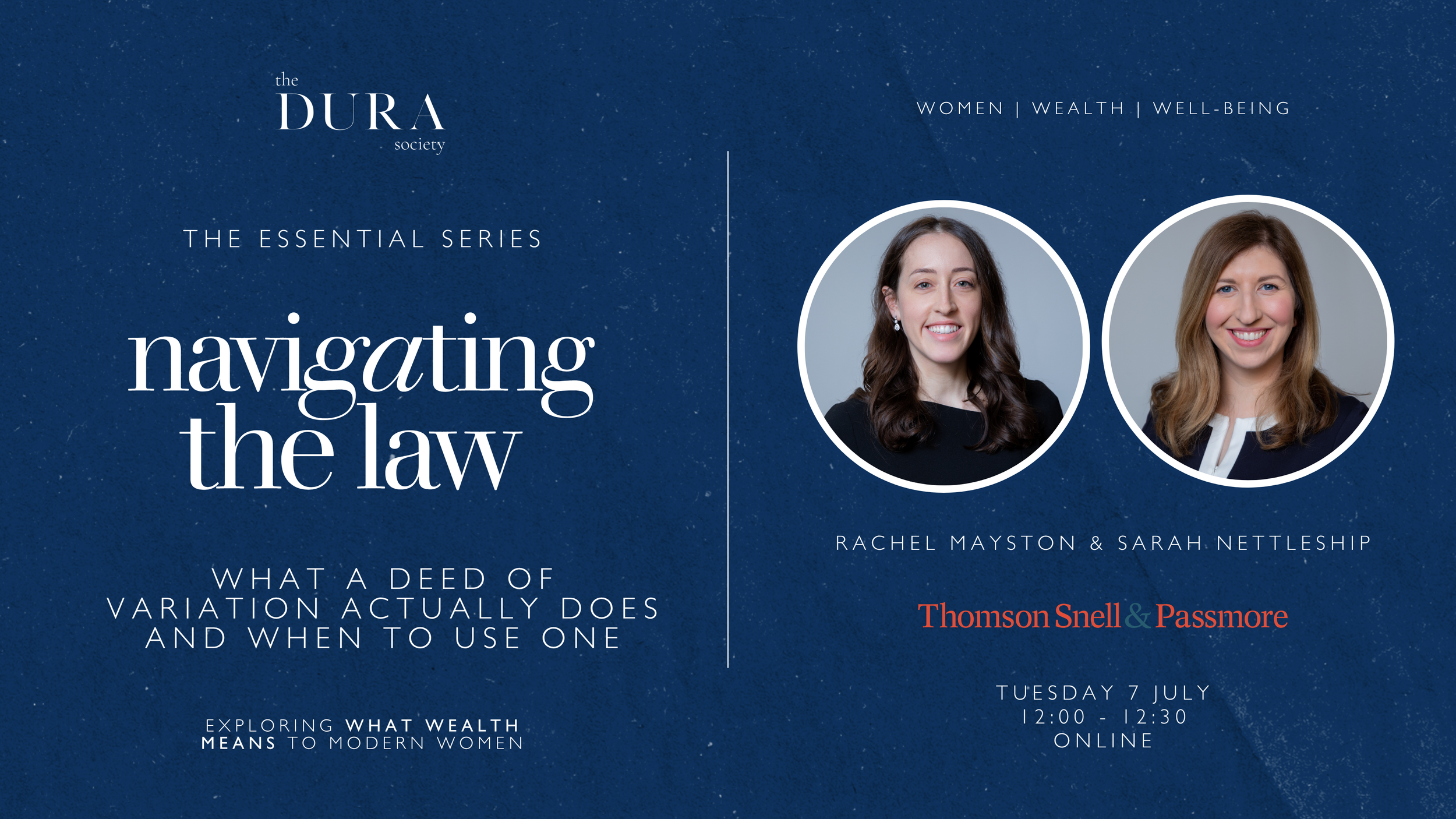
Authored with:
Rachel Mayston, Senior Associate | Thomson Snell & Passmore
Sarah Nettleship, Partner | Thomson Snell & Passmore